Measuring Maximum COAL & Bullet Jump
First, let’s define maximum COAL & bullet jump. COAL stands for Cartridge Over-All Length. Maximum COAL is the maximum cartridge length when the bullet nose is touching the leade (leading edge of the lands). Maximum COAL will be different with dissimilar bullet nose profiles. Bullet jump is the distance the bullet travels from the cartridge to the leade when fired. It should be obvious from these definitions, if the actual cartridge COAL is less than the maximum COAL, then there will be some amount of bullet jump.
An extended throat is common is “sporting” chambers in firearms for hunting or general shooting & can also be found is some target rifles. An extended throat by definition means there is some freebore which results in bullet jump if shooting over-the-counter ammunition that meets SAAMI specification. Freebore is the cylindrical length of bore in a firearm just forward of the chamber in which rifling is not present. See the following illustration. Freebore can be beneficial for a few reasons. One is it reduces the possibility of overpressure situations with magnum cartridges. Weatherby is well-known for using freebore in their “magnum” smokeless rifle chamberings to mitigate high pressures with SAAMI specified factory loads. And two of the Miroku manufactured Browning BPCRs (.40-65 & .45-90) have extended throats as does the same .45-90 BPCRs made for sale by Winchester. The Browning designer indicated it helps with cast bullet alignment which I strongly disagree with. Assuming you’re a reloader, freebore allows you to extend the COAL of the cartridge & add additional powder. But if this is done for a Weatherby rifle you’re defeating the purpose of the freebore & risking over pressuring the chamber.
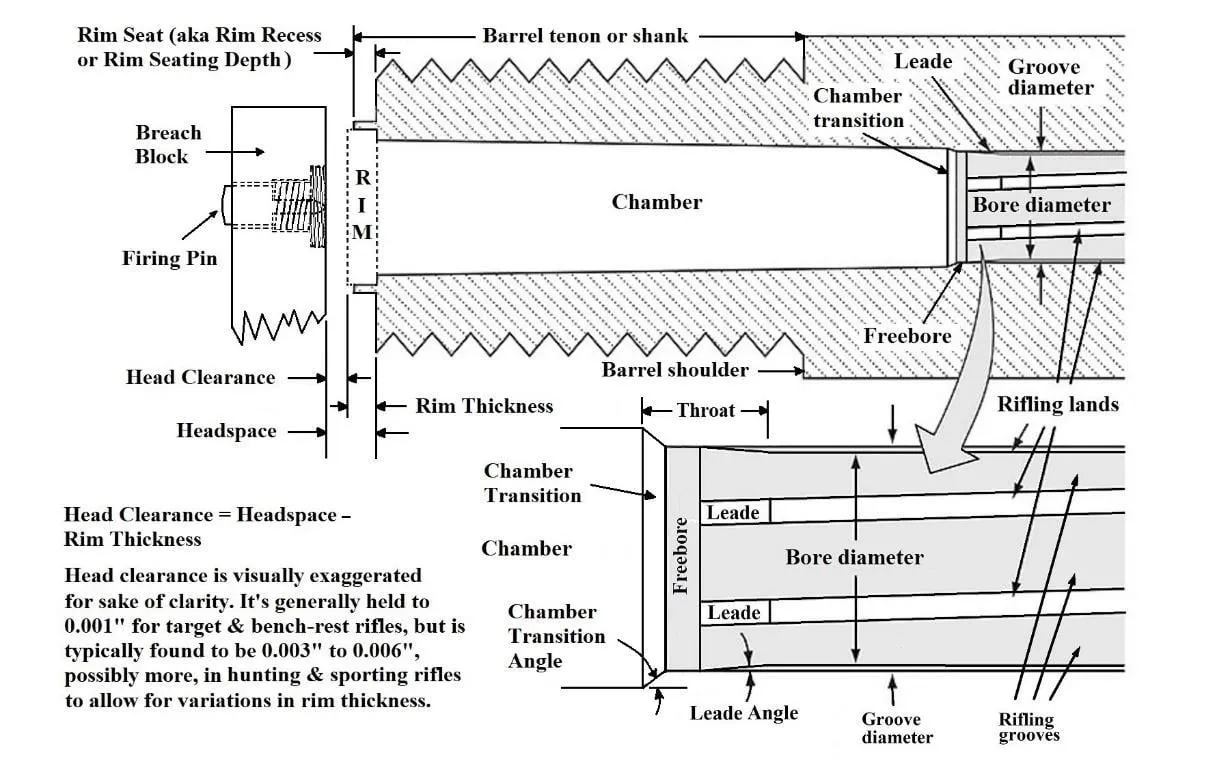
Ammunition designed for & fired in “match” chambers & throats are typically loaded to the maximum COAL or even slightly longer if using soft lead bullets. The goal here is to eliminate bullet jump & possible bullet misalignment which can affect accuracy. Hence one reason to measure bullet jump. As a reloader, with the exception of .22 rimfire ammunition, you have the ability to adjust COAL to match the chamber & throat dimensions. The following technique is used to determine maximum COAL & bullet jump.
You’ll need a long rod, a short rod & two clamps. The locking clamps can be collars or sleeves that will be slipped over the long rod. The long rod should be a few inches longer than the length of the firearms barrel. A standard cleaning rod works great. The clamps are typically locked in place with a setscrew or thumb screw. I found a couple of “collars” in my parts bin with the correct size center hole & drilled & tapped them for a setscrew. If you have a lathe & drill press, making a couple is relatively simple. The short rod or dowel (6” to 8”) will be used to push & seat a bullet into the throat.
The end of the long rod must be flat. If measuring a .22 rimfire firearm using a cleaning rod without a jag, the tip of the nose of a .22 rimfire will likely be smaller than the threaded hole opening in the end of the rod which will result in an inaccurate measurement. In that case either use a jag with a wide flat tip or find a flat-head screw or bolt that will screw into the rod tip. The same applies for larger caliber rifles & bullets.
Step 1: Assuming you’re using collars or sleeves for clamps, slide both onto the measuring rod. Without a cartridge in the chamber, close the bolt or breechblock. Fully insert the measuring rod into the muzzle. While holding the rod firmly against the face of the bolt or breechblock, slide both clamps until they contact the muzzle. Lock the clamp in place that’s furthest from the muzzle.
The next step uses just the bullet (not the cartridge, just the bullet). If it’s a .22 rimfire, obtaining an undamaged bullet is not straight forward since the case lip of most brands are roll-crimped to hold the “heeled” or “heel-base” bullet in place. Even minor damage to the driving bands will affect how far the bullet will seat in the throat. I’ve used two techniques. One method is to use a Dremel tool with a cutting disk or the edge of a sanding drum to gently grind the brass off around the crimped mouth until the bullet is free. The other technique is using a hammer-style bullet puller. But all the ones I’m aware don’t come with a grommet sufficiently small for a .22 cartridge. So, in that case, find a washer with the correct hole diameter to replace the grommet or position it over the grommet. Drill the hole out if necessary. Us some Scotch tape across the washer & cartridge base to hold the cartridge in place as you bang away. This works better & is much faster than the Dremel tool method. Three or four whacks with the bullet puller should dislodge the bullet.
Step 2: Insert just the bullet & lightly push it into the chamber with the short rod or dowel until the bullet contacts the leade. In tight match-grade chambers the bullet may have to be pushed in with some resistance until you feel it firmly stopping as it contacts the leade. Depending on the bore diameter, a pencil, brass punch or similar rod should work fine. While holding the bullet in place insert the measuring rod into the muzzle until it contacts the nose of the bullet. This is when it would be nice to have three hands but two hands will work although it can be a little tricky in a loose chamber. In a tight chamber the bullet should stay in place on its own. While maintaining pressure on the rod holding the bullet & with light pressure on the measuring rod, slide the clamp that is closest to the muzzle until it contacts the muzzle, & lock it in place.
Step 3: As displayed in the photo below, measure the distance between the inside surfaces of the two clamps with a vernier caliper or micrometer. This is the maximum COAL the chamber will handle without the bullet being forced into the leade.
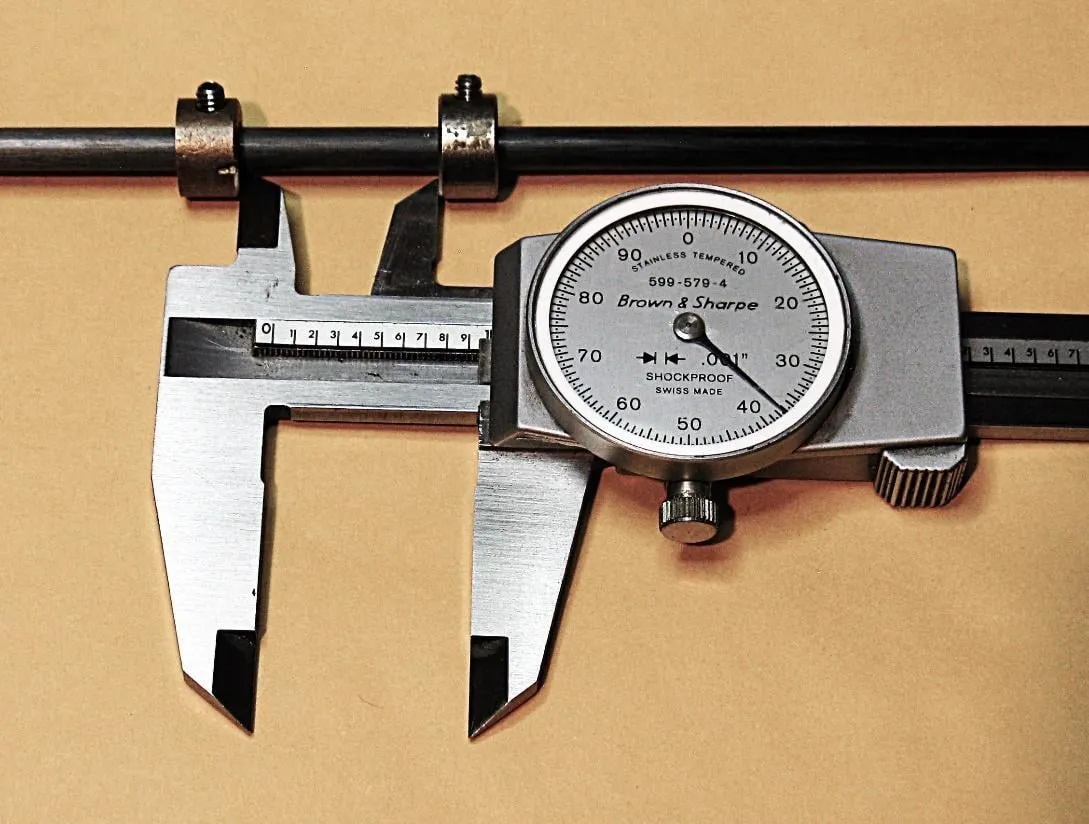
Step 4: To determine the amount of bullet jump, measure the actual cartridge COAL & subtract the maximum COAL. A positive result indicates the amount the nose of the chambered cartridge will be forced into the leade. A negative result indicates the amount of bullet jump.
An example: Using my .22 silhouette target rifle with a match chamber & using Eley Match (black box) ammo, step 3 resulted in a maximum COAL of 0.937”. The COAL of the Eley cartridge is 0.960”. Therefore, when fully chambered, rather than the bullet “jumping” to the lead when fired, the nose of the cartridge is being forced into the leade 0.023”.
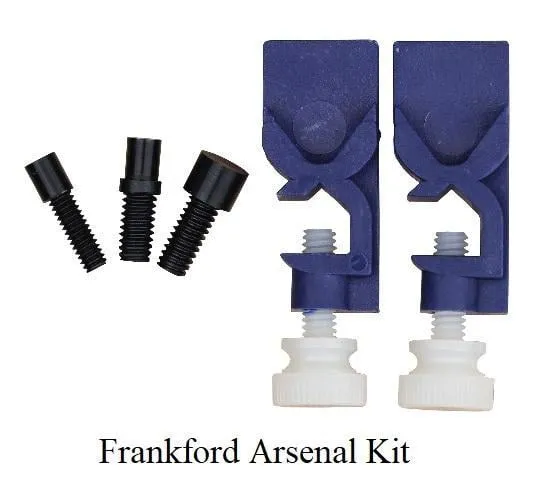
So, having read all the above you might be thinking, “that seems complicated & I don’t have something to use for clamps & no easy method to make them. In that case Frankford Arsenal comes to the rescue with a simple kit called the Frankford Arsenal Overall Length Gauge containing the items in the photo below. The kit contains two adjustable locking clamps that, when used with any cleaning rod, work using a similar measurement technique. Here’s a link to the kit which is available from several firearm equipment suppliers including MidwayUSA & Amazon: https://www.frankfordarsenal.com/cartridge-overall-length-gauge/965887.html/. And a link to a YouTube video using the clamps: https://www.youtube.com/watch?v=9OZ8u8e7mSc. Note that since the clamps are added to the cleaning rod one at a time, the maximum COAL measurement is not determined by the distance between the inside surfaces of the two clamps as is step 3 above, but rather is made from centerline-to-centerline of the clamps as explained in the video.
Wishing you great shooting,
Wayne